Why Real Estate Agents Need 24/7 AI Engagement
Most home buyers reach out after business hours and hire whoever answers first. Here's how an always-on AI agent closes that gap — and what it takes to do it well.
Real estate agents need 24/7 AI engagement because most home buyers reach out after business hours and hire whoever answers first. When 62% of real estate inquiries arrive outside traditional office hours and 78% of buyers work with the first agent who responds, a personal AI agent that replies instantly captures the leads a busy agent would otherwise lose to a competitor.1
This is the exact problem You247 was built to solve. You247 gives real estate professionals an assistant that never sleeps, never misses a message, and answers in the agent's own voice. Below, we break down the numbers, the mechanics, the costs, and the mistakes to avoid.

The speed problem
The single biggest reason agents lose deals is response time. Buyers move on the moment their attention is high — usually the evening they find a listing they love. If nobody replies, they submit the same form to three more agents.
The data is blunt: leads contacted within 60 seconds convert at 23.4%, while a 30-minute delay drops conversion to just 4.8%.2 Yet the average agent takes 917 minutes — more than 15 hours — to respond to a new lead inquiry.1 That gap is where deals die.
Speed is not a nice-to-have: 95% of buyers rate responsiveness as "very important" when choosing an agent.3 A 24/7 AI agent closes the gap to seconds, every hour of every day.

How 24/7 AI engagement actually works
A personal AI agent sits on your website, listing pages, and lead forms, and responds to every inquiry the instant it arrives. Unlike a generic chatbot, it is tuned to your specific business information and tone, so it answers accurately and on-brand without inventing facts.
The step-by-step flow of a captured lead
- Instant reply: A buyer submits a question at 11 p.m. about a three-bedroom listing. The AI responds within seconds.
- Qualification: It asks the right questions — budget, timeline, financing status, preferred neighborhoods — the same way you would.
- Engagement: It shares relevant details, answers follow-ups, and keeps the conversation warm.
- Handoff: A qualified, engaged lead lands in your inbox with the full context ready for you to close.
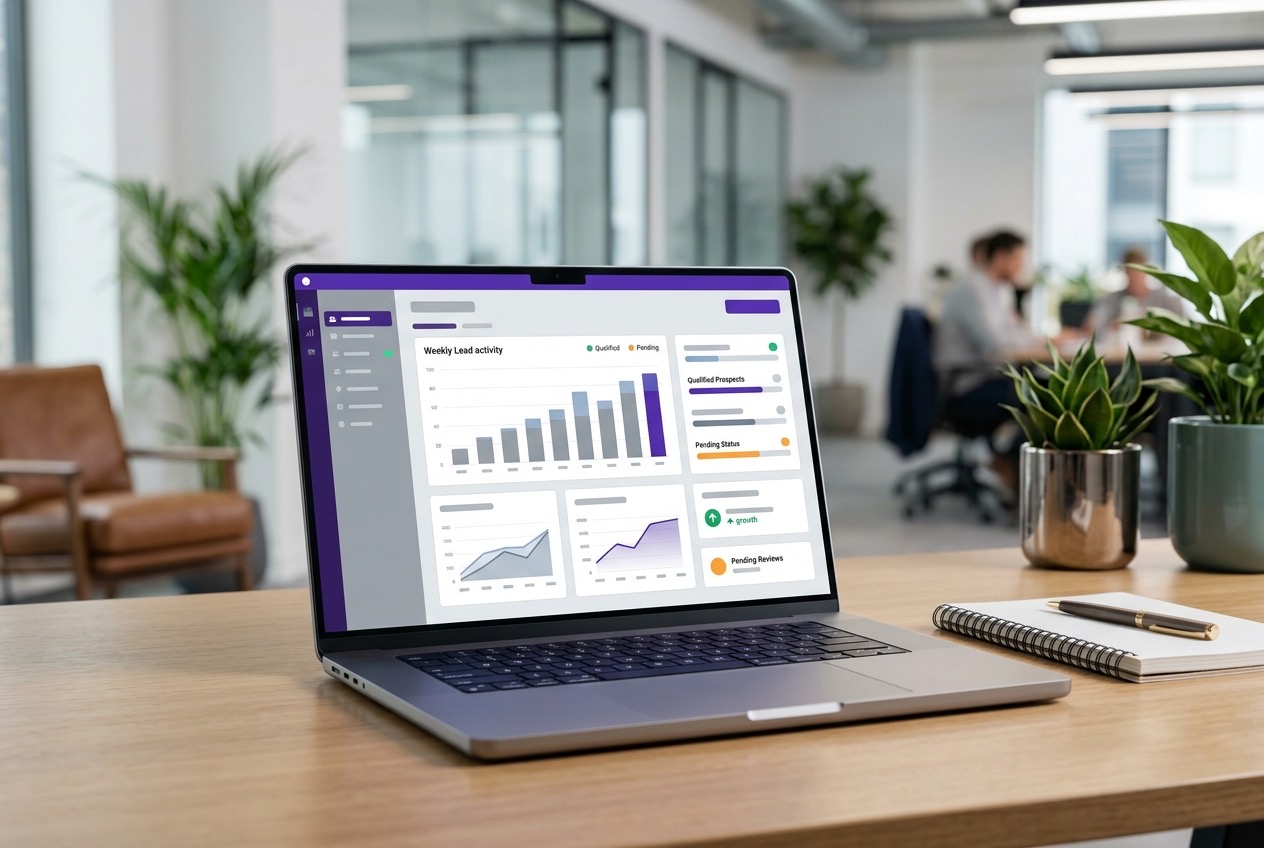
- Reporting: A weekly performance summary shows you how many leads were captured and how they progressed.
Because 91% of brokerages fail to meet even a 5-minute response threshold, an agent who answers in seconds stands out dramatically in a market where nearly everyone is slow.4
What does an AI agent cost real estate agents?
Pricing for AI engagement tools varies widely, from free chat widgets with limited abilities to enterprise contact-center platforms costing thousands per month. A personal AI agent service like You247 is priced for individual agents and small teams rather than large call centers, making it accessible without a broker's budget.
The clearer way to think about cost is the price of doing nothing. An estimated $2.57 billion in listing volume is lost annually, driven by the 93% of past clients who list their next home with a different agent — often because the relationship went cold.5 An always-on agent that keeps conversations alive is cheap compared to the commissions those cold leads represent.
How do you calculate the return?
Take your average commission and multiply it by the extra deals a faster response could win. If instant replies help you convert even one additional buyer a quarter, the math favors AI engagement overwhelmingly. To see how a tailored agent fits your pipeline, explore the You247 personal AI agent built to capture leads around the clock.
What CRM and real estate tools does an AI agent work alongside?
An AI engagement agent is most valuable when captured leads flow straight into where you already work. In practice, that means the AI handles the first conversation and passes clean, structured lead data onward.
- Lead sources: website contact forms, listing landing pages, and social inquiries.
- Communication: email and messaging channels where buyers first reach out.
- Your pipeline: the CRM or spreadsheet where you track and nurture prospects.
- Reporting: weekly summaries that keep you informed without logging in constantly.
The goal is simple: the AI does the round-the-clock listening and qualifying, and you spend your time on showings, negotiations, and closings.
Real examples: how agents use AI to close deals faster
The after-hours listing question
A buyer scrolling at 10:30 p.m. asks whether a home is still available. Instead of waiting until morning, they get an instant answer, book a Saturday viewing, and never contact another agent. Given that 62% of inquiries arrive after hours, this scenario repeats constantly.1
The weekend rush
Open-house weekends generate a flood of questions. An AI agent handles all of them in parallel, qualifying who is serious and who is browsing, so Monday starts with a prioritized list rather than a backlog.
The reactivation of a cold lead
Leads that went quiet months ago can be re-engaged with a well-timed, personalized message. AI-driven campaigns can lift conversion rates by up to 40%, turning dormant contacts into active buyers.6
Why now: AI adoption in real estate has gone mainstream
AI is no longer an edge experiment. 97% of agents at major brokerage firms now use AI tools, up from 80% in 2024.7 The generative AI market for real estate in North America reached $179.44 million in 2024 and is projected to grow at a CAGR of 11.66%.8
What this means for you: your competitors are already adopting AI. The differentiator is no longer whether you use it, but whether you use it to win the response-time race that 91% of brokerages are still losing.4
Common mistakes to avoid
Adopting AI badly can hurt trust. Steer clear of these pitfalls:
- Letting the AI invent answers. A generic bot that guesses about pricing or availability erodes credibility. Choose an agent tuned strictly to your verified information.
- Sounding robotic. Buyers can tell. The AI should reflect your tone so conversations feel like they come from your office.
- Set it and forget it. Review your weekly summaries and refine the questions your AI asks.
- No clean handoff. The AI should qualify and then hand you a warm, informed lead — not leave prospects in limbo.
- Ignoring after-hours coverage. Since most inquiries come in at night and on weekends, an AI that only covers business hours defeats the purpose.
From prospects to loyal customers
The value of 24/7 engagement does not end at capture. Keeping in touch after the sale is where repeat business and referrals come from — and where most agents fall short, given that 93% of past clients switch agents for their next listing.5 A personal AI agent can maintain light, on-brand contact so your name is the one clients remember when they are ready to move again.
You247 is designed to cover this full journey: instant response, smart qualification, and weekly performance summaries that show exactly what your AI captured while you were busy.
Sources
- AgentZap — on after-hours inquiry share, average agent response time, and first-responder win rate.
- Kyzo — on lead response time and conversion rate.
- Fyxer — on buyer-rated importance of agent responsiveness.
- Hyperleap — on brokerage response-time thresholds.
- RealScout — on lost listing volume and past-client agent-switching rate.
- 247 Real Estate Marketing — on AI-driven re-engagement campaign conversion lift.
- Real Estate News — on AI tool adoption among major brokerages.
- Kleio — on the North American generative AI market size for real estate.